Latisse Ophthalmic Solution
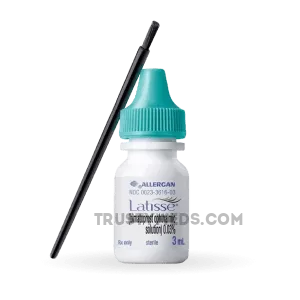

Product Monograph: Latisse® (Bimatoprost Ophthalmic Solution) 0.03% For Hypotrichosis of the Eyelashes
Composition and Pharmaceutical Form
Each mL of Latisse® contains 0.3 mg bimatoprost (0.03% w/v) as the active ingredient. The sterile, isotonic solution is preserved with benzalkonium chloride 0.05 mg/mL. Inactive components include citric acid, sodium chloride, sodium phosphate dibasic, and purified water. The solution is adjusted to pH 6.8–7.8 using sodium hydroxide or hydrochloric acid.
Clinical Pharmacology
Bimatoprost belongs to the prostamide class of synthetic analogues structurally related to prostaglandin F2α. Unlike traditional prostaglandin analogues that primarily target the FP receptor, bimatoprost demonstrates high affinity for prostamide receptors, which are distinct from classical prostaglandin receptors. This pharmacological distinction explains both its unique efficacy profile for eyelash growth and its reduced propensity for certain prostaglandin-associated adverse effects.
The mechanism by which bimatoprost stimulates eyelash growth involves prolongation of the anagen (growth) phase of the hair cycle, increasing the number of hairs that simultaneously enter the growth phase, and potentially stimulating melanogenesis in the hair follicle. Histological studies have demonstrated increased follicle size and enhanced hair shaft diameter following chronic exposure.
Pharmacokinetics
Following topical ocular administration, bimatoprost undergoes minimal systemic absorption. Peak plasma concentrations reach approximately 0.67 ng/mL within 10 minutes, declining rapidly below detection limits within 4 hours. The compound is primarily metabolized via hydrolysis and glucuronidation in the liver and kidney. Terminal elimination half-life is approximately 45 minutes. Systemic exposure is negligible, with less than 0.1% of the applied dose reaching the circulation.
Indications for Use
Latisse® is indicated for the treatment of hypotrichosis of the eyelashes, defined as inadequate or insufficient eyelashes. The product is intended to increase eyelash length, thickness, and darkness in patients who desire cosmetic enhancement of their natural lashes.
Contraindications
Latisse® is contraindicated in patients with known hypersensitivity to bimatoprost, benzalkonium chloride, or any component of the formulation. Patients with active ocular infection, inflammation, or history of macular edema should not initiate therapy without thorough ophthalmological evaluation.
Warnings and Precautions
The most significant safety concern involves potential changes to intraocular pressure (IOP). Bimatoprost is chemically identical to the active ingredient in Lumigan®, a medication approved for glaucoma management. While Latisse® is applied to the eyelash base rather than directly into the eye, inadvertent ocular exposure can occur. Patients with pre-existing glaucoma or ocular hypertension should be monitored closely.
Increased iris pigmentation has been documented with bimatoprost use. This change results from increased melanin content within iris melanocytes and may be permanent. The effect appears dose-dependent and occurs more frequently in patients with green-brown or blue-brown irides. Eyelid skin darkening has also been reported and may be reversible upon discontinuation.
Periorbital fat atrophy, a known complication of prostaglandin analogue therapy, has been reported with chronic use. This manifests as deepening of the upper eyelid sulcus and may create an appearance of enophthalmos. The effect is typically reversible within 3–6 months of discontinuation but can be distressing for patients.
Adverse Reactions
The most commonly reported adverse effects include ocular hyperemia (conjunctival injection), occurring in approximately 4% of patients in clinical trials. Ocular pruritus, dry eye symptoms, and foreign body sensation affect 1–3% of users. More serious but less common events include cystoid macular edema, uveitis, and herpes simplex keratitis reactivation.
Dosage and Administration
One drop of solution is applied once daily in the evening to the base of the upper eyelashes using the provided sterile applicators. A new applicator must be used for each eye to prevent cross-contamination. The solution should be applied to clean, makeup-free skin at the lash line. Patients should blot excess solution with a tissue to prevent runoff into the eye.
Clinical response typically becomes visible within 4–8 weeks, with maximal effect achieved at 12–16 weeks. Continued use is necessary to maintain results; discontinuation leads to gradual return to baseline appearance over 4–8 weeks.
Drug Interactions
No formal drug interaction studies have been conducted with Latisse®. However, concurrent use of other prostaglandin analogues may produce additive ocular hypotensive effects. Patients using topical ophthalmic medications for glaucoma should separate administration by at least 5 minutes.
Use in Special Populations
Pregnancy Category C: Bimatoprost has demonstrated embryotoxicity in animal studies at doses 50–100 times the human exposure. No adequate human studies exist. Latisse® should be used during pregnancy only if potential benefit justifies fetal risk.
Lactation: Bimatoprost is excreted in rat milk. No human lactation data exist. Caution is advised when administering to nursing women.
Pediatric Use: Safety and efficacy in patients under 18 years have not been established.
Clinical Studies
The pivotal Phase III trial enrolled 278 patients with bilateral hypotrichosis. Subjects applied bimatoprost 0.03% or vehicle once daily for 16 weeks. Primary endpoints included Global Eyelash Assessment (GEA), lash length, thickness, and darkness measured by digital image analysis.
Results demonstrated statistically significant improvement in all endpoints compared to vehicle. Mean lash length increased by 1.4 mm (25% improvement), lash thickness improved by 106% as measured by number of visible lashes, and darkness increased by 18% on a standardized scale. The GEA showed improvement from baseline in 78% of treated patients versus 18% of controls.
Long-term extension studies following patients for 12 months demonstrated maintained efficacy without tachyphylaxis. Safety profiles remained consistent with the initial 16-week observation period.
How Supplied
Latisse® is supplied as a 3 mL or 5 mL sterile solution in a dropper bottle, packaged with 60 or 100 sterile applicators respectively. The product should be stored at 15–25°C (59–77°F) and protected from light.
Clinical Commentary and Personal Observations
You know, the really interesting thing about this drug is how differently patients respond. I had a 42-year-old woman, let’s call her Maria, who came in after seeing the ads—you know the ones with the dramatic before-and-after photos. She had these sparse, almost invisible lashes that she’d been trying to camouflage with extensions for years. After 12 weeks on Latisse, she came back for follow-up and honestly, the change was remarkable. Not just longer but denser, darker. She looked like she was wearing mascara all the time. She told me she actually stopped wearing eye makeup entirely, which was not something she’d ever imagined.
But not everyone has that experience. I’ve had patients who got almost no response after 6 months—maybe 20% improvement at best. And then there’s the pigmentation issue. I had a 35-year-old man, a lawyer, who used it for about 4 months and developed this noticeable darkening of his upper eyelid skin. He was upset, understandably. We stopped the medication and it did fade over about 3 months, but he was pretty anxious during that period.
The periorbital fat thing is something I’ve started seeing more of as more people use it long-term. There was this one patient, a 58-year-old woman who’d been on it for almost 2 years. She came in complaining that her eyes looked “sunken” and tired. I looked back at her old photos and yeah, there was definite volume loss in the upper lids. She stopped using it and gradually improved over 4-5 months. But she was really upset that nobody had warned her about this possibility.
The team actually argued about this during product development. Some of the dermatologists wanted to emphasize the fat atrophy risk more prominently in the labeling, but the ophthalmologists were concerned that would scare people away from a generally safe product. We settled on the current wording but honestly, I think we should have been more direct.
One thing that surprised me—and this wasn’t in the clinical trials—was the effect on eyebrow hair. I’ve had several patients report that they started noticing thicker, darker eyebrows after using Latisse on their lashes. I guess the drug gets transferred when they rub their eyes or something. Not an approved indication, obviously, but interesting.
The applicator system is actually quite clever. The sterile single-use wands prevent contamination, which was a real problem with the earlier compounding formulations people were getting from dermatologists. I remember in the early 2000s, before Latisse was FDA-approved, patients were using Lumigan drops on their lashes with cotton swabs and getting all sorts of infections.
I’ve been following a subset of my patients for about 5 years now. The ones who stayed on it consistently have maintained their results, though I’ve noticed some minor fluctuations in lash density over time. Maybe a 10-15% decrease from the peak at 6 months, but still way better than baseline. A few patients stopped and restarted, and they all reported that the second time around, the response was a bit slower—maybe 10-12 weeks instead of 8 weeks to see results.
The cost is a barrier for many patients, unfortunately. Insurance typically doesn’t cover cosmetic use, and at about $120-150 per bottle, it’s not cheap. I’ve had patients try to stretch their supply by using half-drops or skipping days, which generally doesn’t work as well.
Overall, I’d say it’s a solid product for the right patient. I always do a baseline eye exam, check for any history of glaucoma or macular edema, and warn them about the pigmentation and fat atrophy risks. Most patients are satisfied, especially if they have realistic expectations. The ones who get disappointed are usually the ones who expected dramatic Hollywood lashes in 2 weeks. I tell them it’s a marathon, not a sprint. And for some people, it’s just not worth the hassle. But for the ones who stick with it, it can be genuinely transformative.
I had a patient recently, a 28-year-old woman with alopecia areata that affected her eyelashes. She was really self-conscious about it. After 4 months on Latisse, she had enough lashes to wear mascara for the first time in 3 years. She cried in my office. That’s the kind of thing that makes you remember why you went into medicine in the first place.
More info:
Popular Products
Alphagan
Alphagan (tartrato de brimonidina) al 0.1% y 0.15%: Revisión de la Evidencia Clínica y Perfil de Seguridad para el Glaucoma y la Hipertensión Ocular 1. Introducción: ¿Qué es Alphagan? Su Rol en la Oftalmología Moderna Mire, cuando uno lleva años en esto, ve pasar modas terapéuticas. Pero el Alphagan… el Alphagan es de esos fármacos que se ganan un lugar en la trinchera. No es el más potente, no es el más nuevo, pero es terriblemente útil cuando sabes usarlo.
Aquasol A
Aquasol A: Revisión Basada en Evidencia para la Prevención de la Deficiencia de Vitamina A y el Soporte de la Salud Visual 1. Introducción: ¿Qué es Aquasol A? Su Rol en la Práctica Clínica Moderna Mire, llevo más de 20 años recetando suplementos liposolubles y he visto de todo. Pacientes que no mejoran con dosis altas de vitamina A estándar, otros con fibrosis quística que simplemente no absorben las gotas oleosas tradicionales.
Besivance Ophthalmic Solution: Perfil Clínico Completo para el Tratamiento de la Conjuntivitis Bacteriana
Última revisión: Octubre 2024 1. Introducción: ¿Qué es Besivance y su Papel en la Oftalmología Moderna Besivance (besifloxacino) es una solución oftálmica antibacteriana de tercera generación, perteneciente a la familia de las fluoroquinolonas, desarrollada específicamente para el tratamiento tópico de la conjuntivitis bacteriana. Lo que distingue a Besivance de otras fluoroquinolonas como moxifloxacino o gatifloxacino es su perfil único: es la única fluoroquinolona diseñada exclusivamente para uso oftálmico tópico, sin formulación sistémica equivalente.
Betoptic: Betaxolol Oftálmico para el Control de la Presión Intraocular - Revisión Basada en Evidencia
1. Introducción: ¿Qué es Betoptic? Su Papel en la Oftalmología Moderna Mire, llevo 22 años viendo pacientes con glaucoma, y si hay algo que aprendí es que no existe el “mejor” fármaco para todos. Pero el Betoptic… bueno, tiene un lugar especial. Es betaxolol al 0.5%, un betabloqueante cardioselectivo diseñado específicamente para uso tópico ocular. La primera vez que lo receté fue en 2004, una paciente de 68 años con glaucoma de ángulo abierto que no toleraba el timolol.
Careprost: Solución Tópica para Hipertricosis de Pestañas - Monografía Clínica Integral
Meta Description: 1. Introducción: ¿Qué es Careprost y su Rol en la Medicina Estética Moderna Mira, cuando empecé en esto de la dermatología cosmética, allá por el 2014, el tema de las pestañas era casi una ocurrencia tardía en la consulta. Las pacientes llegaban con sus quejas de siempre: acné, manchas, arrugas… y de repente, casi de pasada, mencionaban “doctor, y mis pestañas, ¿no hay nada?”. En ese entonces las opciones eran básicamente rímel, extensiones o aceptar la genética.
Ciloxan Ophthalmic Solution
Ciloxan Solución Oftálmica: Revisión de Eficacia y Seguridad en Infecciones Oculares Bacterianas 1. Introducción: ¿Qué es Ciloxan y Cuál es su Lugar en la Oftalmología Moderna? Mire, cuando uno lleva años en esto, se da cuenta de que no todos los antibióticos tópicos son iguales. Ciloxan, cuyo principio activo es el ciprofloxacino al 0.3%, es una de esas herramientas que uno agradece tener en el consultorio. Es una fluoroquinolona de segunda generación, pero no se deje engañar por la clasificación: en el ojo, sigue siendo un caballo de batalla.
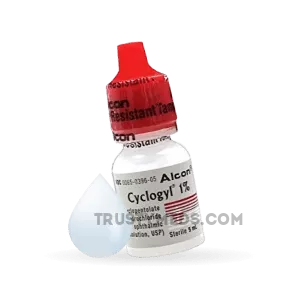
Cyclogyl: Revisión Integral de un Agente Ciclopléjico y Midriático en la Práctica Oftalmológica Moderna
Miren, les voy a ser honesto. Cuando empecé en oftalmología hace veinte años, el Cyclogyl era prácticamente el estándar de oro para todo: desde refracciones en niños hasta exámenes de fondo de ojo en adultos. Pero con los años, uno aprende que no todo es tan sencillo como lo pintan en los libros. He visto casos donde funcionó de maravilla y otros donde casi termino llamando a toxicología. El ciclopentolato, comercializado como Cyclogyl, es un fármaco anticolinérgénico que bloquea los receptores muscarínicos del músculo ciliar y del esfínter del iris.
Cyclomune Eye Drops
Las gotas oftálmicas de ciclosporina al 0.1% han sido un punto de inflexión en mi práctica clínica diaria. No es un fármaco nuevo, pero la formulación en emulsión ha cambiado las reglas del juego para pacientes con ojo seco severo que no responden a lágrimas artificiales. Composición y Formulación La formulación actual que más utilizo contiene: Ciclosporina A 0.1% (1 mg/mL) Vehículo: emulsión oftálmica estéril Excipientes: glicerol, aceite de ricino polioxil 40 hidrogenado, carbómero 974P, agua purificada La concentración del 0.
Diamox: Inhibidor de la Anhidrasa Carbónica para el Manejo de Glaucoma, Edema y Mal de Altura - Monografía Clínica Integral
1. Introducción: ¿Qué es Diamox? Su Papel en la Medicina Moderna Diamox, cuyo nombre genérico es acetazolamida, es un inhibidor de la anhidrasa carbónica, una enzima fundamental en múltiples procesos fisiológicos. Pertenece a la clase de los diuréticos, pero su mecanismo de acción único lo distingue de las tiazidas o los diuréticos de asa. Su historia clínica se remonta a la década de 1950, cuando fue uno de los primeros fármacos orales eficaces para reducir la presión intraocular en el glaucoma.